Industry News | 23 people died in a fire at a South Korean battery factory. Lithium battery safety cannot be ignored
A few days ago, a fire broke out at a battery factory in Hwaseong, Gyeonggi Province, South Korea, killing 23 people. Preliminary judgment shows that 17 of the victims are Chinese citizens. Many South Korean media said that this may become the "worst chemical plant accident in South Korea's history."
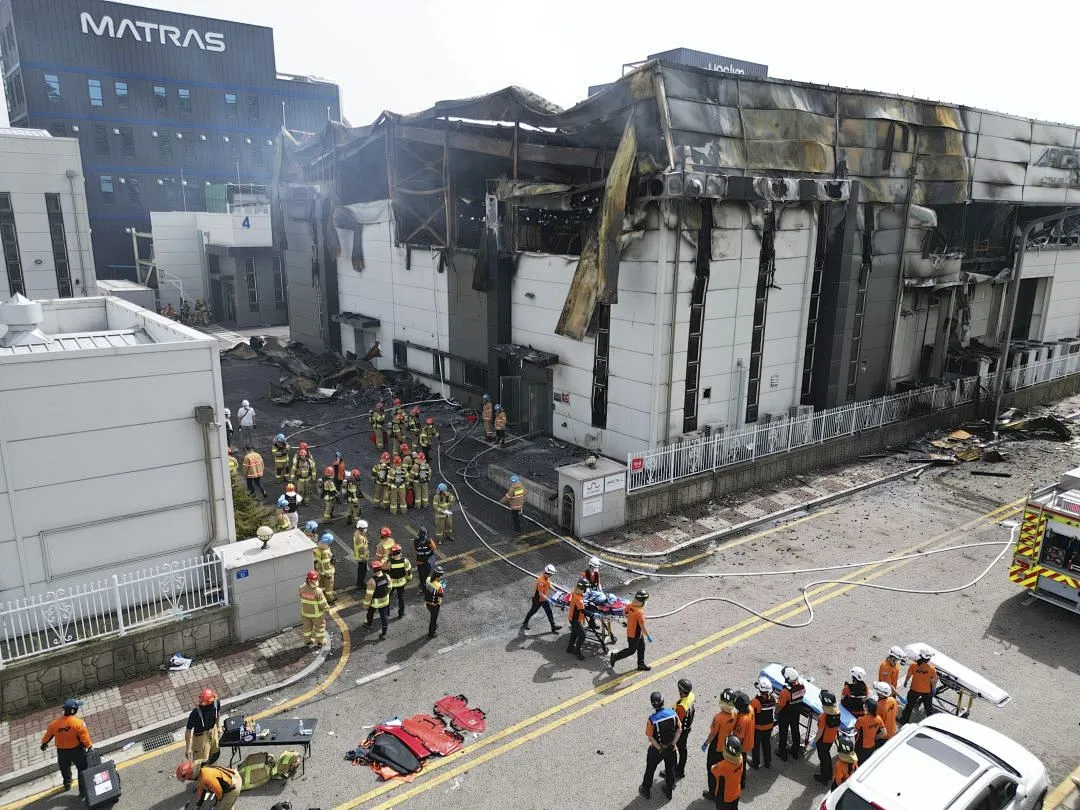
This incident has aroused great concern about battery manufacturing safety around the world. As a high-tech enterprise in new energy high-voltage DC testing, T-Breaker is well aware of the importance of battery safety and is committed to helping new energy vehicle companies improve the safety performance of electric vehicles.
According to AFP, lithium batteries, which are widely used in laptops and new energy vehicles, have a high risk of explosion. When lithium batteries burn, the temperature is very high, the fire spreads quickly, and it is difficult to control the fire by conventional means. The Hankyoreh said that the biggest problem with lithium battery fires is the "thermal runaway" phenomenon. Even if the initial flames are extinguished, the heat will cause "thermal runaway" of other batteries nearby, triggering a chain reaction.
In order to improve the power performance and driving range of new energy vehicles, the capacity of new energy vehicle power battery packs is getting larger and larger, and the energy can reach tens or even hundreds of kilowatt-hours. Once a short circuit occurs in the power battery pack, huge energy will be generated instantly, and there is a risk of explosion and fire, which seriously endangers the safety of the vehicle and passengers. The short-circuit protection of the high-voltage circuit of new energy vehicles is mainly achieved through fuses. Due to the complex and changeable operating conditions of electric vehicles, fuses need to meet the requirements of short-term overload tolerance and short-circuit disconnection speed at the same time. In addition, the power consumption and heat dissipation of the fuse itself will also have an adverse effect on the system working environment. The performance and quality of the fuse are the key to short-circuit protection of the high-voltage DC system of electric vehicles.
T-Breaker has a professional third-party testing organization that is committed to assisting the new energy industry in creating high-quality electrical products, providing DC sources, high voltage, high current, and customized testing environments. The products that can be tested include DC fuses, relays, circuit breakers, contactors, etc. The application areas cover new energy vehicles, photovoltaic products, energy storage, military industry, aerospace, etc., and can issue CNAS and CMA dual qualification reports to users.
T-Breaker innovatively uses supercapacitors and large-capacity solid-state switches as new test solutions to solve the test difficulties under high power demand and reduce dependence on the power grid; in terms of testing capabilities, T-Breaker currently achieves a minimum inductance of 1.7uH and reaches DC2500V/20kA, providing strong support for electric vehicle safety assessment. With high-quality testing technology and services, T-Breaker has not only established a stable and continuous cooperative relationship with the domestic new energy industry chain, but also continues to receive demand orders from overseas new energy industry customers such as Japan, South Korea, Europe and the United States.
As an active practitioner of the country's "dual carbon" strategy, T-Breaker will continue to promote the transformation of innovative research and development results, provide more testing guarantees for lithium battery safety, provide stronger support for electric vehicle safety assessments, and assist the high-quality development of the new energy industry.
Content reference: Southern Weekend, China Youth Daily